Defrost, Delta T and the Truth About Cold Snaps: Reading Your Heat Pump Like an Engineer
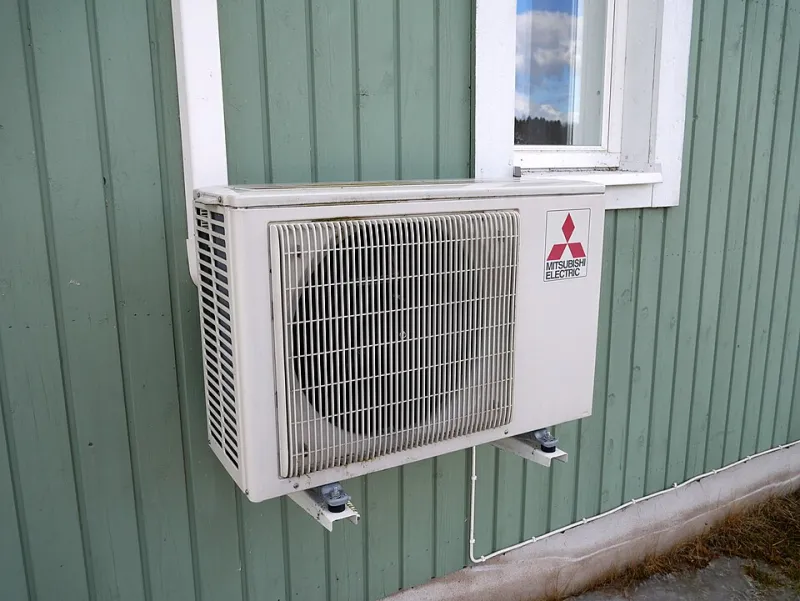
Photo: Santeri Viinamäki, CC BY-SA 4.0, via Wikimedia Commons
Every January the same conversation returns. A neighbour reports that their heat pump 'gave up' during a frosty fortnight, a newspaper column repeats a claim about efficiency, and a householder in a 1970s semi wonders whether the readings on their smart meter are proof of a mistake. The useful question is not whether heat pumps work in the cold — they are the standard heating system in Norway, Sweden and Finland — but whether a particular installation is running well in the particular house it serves.
That distinction matters because the UK housing stock is unusually varied. A well-insulated new-build in Bristol and a solid-walled Victorian terrace in Sheffield can share the same outdoor unit and have completely different experiences of the same cold spell. What follows is a guide to reading the evidence rather than the headlines.
Why cold-weather complaints often start with three numbers
Almost every heat pump dispute comes down to flow temperature, coefficient of performance (COP) and defrost behaviour. Homeowners rarely see the first, frequently misread the second and almost always notice the third. Understand those three and most of the confusion dissolves.
COP is simply the ratio of heat delivered to electricity consumed at a given moment. A COP of 3 means three kilowatt-hours of heat for every kilowatt-hour of electricity. It is not a fixed property of the machine. It moves continuously with outdoor air temperature, the temperature of the water going to your radiators, and how hard the compressor is working.
Myth one: heat pumps stop working when it gets really cold
They do not stop, but their output and efficiency decline as the outside air gets colder, because there is less heat to harvest. Installers design to a local design temperature — commonly around minus two or minus three degrees Celsius across much of the UK — and specify a unit that meets the building's heat loss at that point.
Where problems appear, they usually come from a mismatch between the design and the dwelling. A system sized on an optimistic heat loss calculation, or installed without upgrading undersized radiators, may lean on its immersion heater or backup element during a severe snap. That keeps the house warm but drags the measured efficiency down sharply. If your auxiliary heater is running for hours on end, that is a design or commissioning issue to raise with your installer, not evidence that the technology is unsuitable for the UK.
Myth two: defrost cycles mean something is broken
On a damp, foggy morning at two or three degrees, frost builds on the outdoor coil. To clear it, the system briefly reverses, pulling heat from the house to melt the ice. You may see a plume of vapour, hear a change in tone, and notice water dripping from the base. The indoor unit effectively pauses for a few minutes.
In the worst conditions this can happen roughly every half hour to an hour. It looks dramatic and it dents instantaneous efficiency, but it is normal and necessary. Persistent, repeated defrosting with poor recovery, ice that never clears, or a unit that ices up at mild temperatures suggests a fault — low refrigerant charge, a blocked drain, a sensor problem — and warrants a service visit.
Myth three: a COP of 2 in January proves heat pumps are a con
A momentary reading of 2.2 on a cold afternoon with 45-degree water is entirely plausible. It is also not the number to judge a system by. Seasonal performance accounts for the mild weeks, the shoulder months and the hot water load, and it is usually expressed as SCOP or SPF.
Your handover pack should contain an MCS SCOP estimate. Compare that with what your system actually delivers over a full heating season, not a single icy week. Most households lack a heat meter, so true delivered heat is invisible; a heat meter or a monitoring system that reads both electrical input and heat output is the only way to calculate real COP. Failing that, compare annual electricity consumption against the predicted figure from your design. If the gap is large, investigate rather than assume.
The flow temperature habit that matters more than the weather
A heat pump running at 35 to 40 degrees Celsius will generally outperform one running at 50 to 55 degrees, whatever the sky is doing. Weather compensation — a control curve that lowers flow temperature as the outside air warms — is the single most valuable setting to get right.
This is why radiator upgrades matter. Oversized radiators let you run cooler water and still heat the room, and cooler water lifts COP across the whole season. If your installer left the system on a fixed high flow temperature because it was quicker to commission, ask for it to be reviewed.
What a reasonable winter week looks like on the meter
Exact figures depend on the property, but a useful sanity check is to divide your annual heat demand by your expected SCOP. A three-bedroom semi needing 8,000 kWh of heat a year at a SCOP of 3.2 would use roughly 2,500 kWh of electricity annually, with perhaps 400 to 500 kWh falling in the coldest month.
If your January consumption is two or three times that estimate, the house, the controls or the commissioning deserve scrutiny. If it is broadly in line, the system is probably doing what it was designed to do, even if the daily numbers look alarming next to a mild October.
Tariff timing: cheap windows and thermal storage
Time-of-use tariffs such as Cosy or Agile can reduce running costs, but only if the building can absorb the cheap heat. A well-insulated home with underfloor heating or a large hot water cylinder can pre-heat during a cheap window and coast through the expensive hours. A leaky home with small radiators cannot, and chasing every price dip can increase consumption.
A sensible starting point is a fixed cheap window for hot water and a modest pre-heat before the evening peak. Add smart controls and tariffs later, once the basics are stable.
A practical winter efficiency checklist
- Retrieve your MCS handover pack and note the predicted SCOP, design flow temperature and heat loss figure.
- Check the current flow temperature on the controller and confirm weather compensation is enabled.
- Feel radiators across the house; cold tops or cold rooms point to balancing or sizing problems.
- Watch a defrost cycle and confirm the unit clears fully and drains away.
- Set hot water to around 48 to 50 degrees Celsius with a weekly legionella cycle, rather than running it hotter than needed.
- Clean or check filters and keep the outdoor unit clear of leaves, snow and obstruction.
- Compare monthly electricity use with the design prediction, not with a neighbour's gas bill.
- Review tariff and scheduling once, then leave the system to settle rather than adjusting daily.
When to call your installer
Persistent ice, error codes, auxiliary heating running for hours, a house that cannot reach temperature on a cold evening, or a measured performance far below the design estimate are all legitimate reasons to book a service and a controls review. A heat pump that is correctly sized, properly commissioned and paired with a decent thermal envelope will handle a British winter without drama. The meter readings are there to confirm that, not to undermine it.