The Thirty-Day Diagnostic: Reading Half-Hourly Meter Data Before Buying Renewables
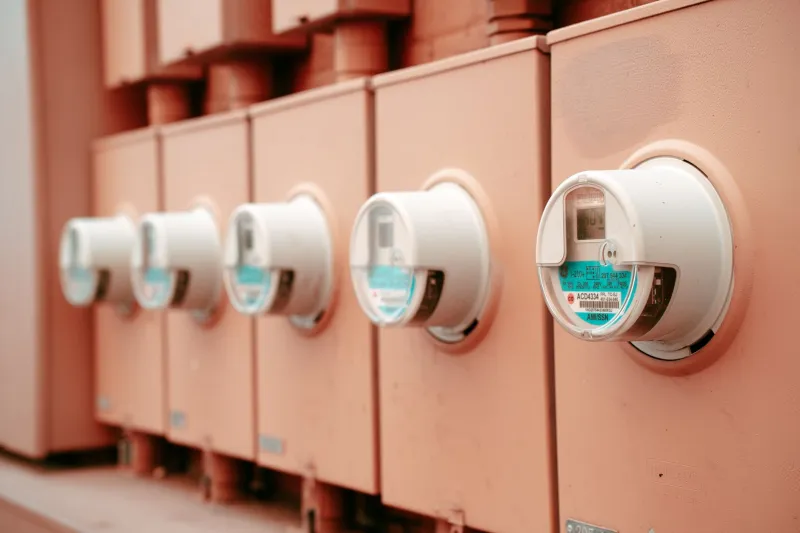
Most domestic renewable projects begin with a quotation, not a diagnosis. A homeowner asks for a solar array, a battery or a heat pump, and the installer responds with a hardware proposal. Yet the most useful evidence often sits unnoticed in the smart meter: a record of how the property actually uses electricity, half hour by half hour. Used properly, that record is a free energy survey. It will not replace a site survey, a heat-loss assessment or an electrical inspection, but it can prevent an expensive mismatch between the household and the technology.
What the meter record contains
A smart meter typically records electricity consumption in half-hourly intervals. That produces 48 readings a day and, over a month, around 1,500 rows of data. Each row should show a timestamp and a consumption figure in kilowatt-hours. The interval is important: monthly bills hide the shape of demand, while half-hourly data shows when loads occur and how large they are.
In the UK, homeowners can request this data from their electricity supplier, often as a CSV download, or access it through supplier apps and authorised data services. The request should specify half-hourly consumption data, not a summary bill. It is worth checking the units, the time zone and whether any days are missing. Clocks change between British Summer Time and Greenwich Mean Time, and an uncorrected file can make evening peaks appear an hour early or late.
Thirty days is a starting point, not a complete year. A month in a shoulder season may not capture the coldest week or the longest summer day. A winter month is often more revealing for heating and hot water, while a summer month is better for assessing solar self-consumption. Where possible, compare at least one winter month with one summer month.
Establish the baseload first
The baseload is the electricity a property draws when nothing deliberate is running. It includes refrigeration, broadband, standby loads, alarms, pumps and any always-on equipment. To estimate it, look at the lowest sustained readings between roughly 1am and 5am, excluding any electric-vehicle charging or overnight immersion heater use. A consistent overnight floor across several days is a reasonable approximation.
This figure matters for battery sizing. A high baseload can make a battery look attractive because it appears to offer round-the-clock savings. In practice, reducing that baseload is usually cheaper than storing energy to serve it. A battery sized to carry a large always-on load through the night may never pay back as expected. The diagnostic question is not simply how much electricity the home uses, but how much of it is avoidable, shiftable or genuinely worth storing.
Separate the large loads
With the baseload established, the remaining consumption can be divided into recognisable patterns.
Electric heating tends to produce morning and evening peaks that grow as outdoor temperatures fall. If the home uses gas for heating, those peaks will be smaller, but the data may still show electric showers, fan heaters or supplementary room heaters. A heat pump installed later will change the shape of demand substantially, so the existing record is a baseline rather than a forecast.
Hot water is often visible as short, high-power events. An immersion heater may draw around 3 kW for an hour or more. If the property has a gas combi boiler, hot water will not appear in electricity data at all, which is an important limitation. If there is a hot-water cylinder with an immersion, the data can show whether it is being used as a regular top-up or as a back-up.
Electric-vehicle charging usually appears as a large block, often between 7 kW and 11 kW for several hours, frequently overnight. Once identified, it should be separated from the domestic baseload and from heating. An EV is a flexible load: it can be moved, moderated or matched to solar generation. A heat pump is far less flexible in cold weather.
Match the pattern to the technology
Solar PV performs best when generation coincides with daytime consumption. A household that is empty during the day and uses most electricity in the evening will export a larger share of its solar output unless it adds a battery or shifts loads. That is not an argument against solar, but it is an argument for sizing and tariff design based on the household's real rhythm.
A battery is most useful when there is a clear daily mismatch: solar generation in the day, demand in the evening, or a time-of-use tariff with a cheap overnight window. Half-hourly data can show how much evening demand exists, how long it lasts and whether it is predictable. It can also show whether an electric vehicle is already providing a large, controllable load that could absorb cheap or solar electricity without a battery.
A heat pump changes the demand profile. It will usually increase winter electricity consumption and reduce gas use. Before committing, the data should be read alongside a fabric assessment and a heat-loss calculation. A smart meter can show how much electricity the home already uses for heating and hot water, but it cannot show how much heat escapes through the walls, roof or windows.
Test scenarios before spending
A simple spreadsheet is enough to compare options. Place the half-hourly consumption data alongside an estimated solar-generation profile for the property. Then model a battery by shifting a proportion of evening import to stored daytime generation. The assumptions should be conservative: no battery is perfectly efficient, and not every kilowatt-hour generated will be used on site.
Ask installers to work from the data rather than from annual consumption alone. A proposal that assumes high self-consumption without examining the timing of demand deserves scrutiny. So does a battery sized to the largest evening peak rather than to the household's typical evening use. The data provides a common language for the homeowner and the installer.
The limits of the exercise
Half-hourly data is a diagnostic, not a design. It does not show gas consumption, occupancy changes, future appliance purchases or the effect of a new heat pump. It may contain gaps, estimated readings or a period that is not representative. Privacy also matters: consumption data can reveal when a property is occupied, so it should be shared only with trusted parties and used for a defined purpose.
Used with those caveats, however, it is a valuable first step. Before buying renewables, a homeowner should know the overnight floor, the evening peak, the hot-water signature and the electric-vehicle block. That knowledge turns a quotation into a considered specification, and it reduces the risk of buying hardware that is oversized, undersized or simply mismatched to the life being lived inside the property.