The Unseen Roof: Why Access Determines the Real Price of a 2026 Solar Installation
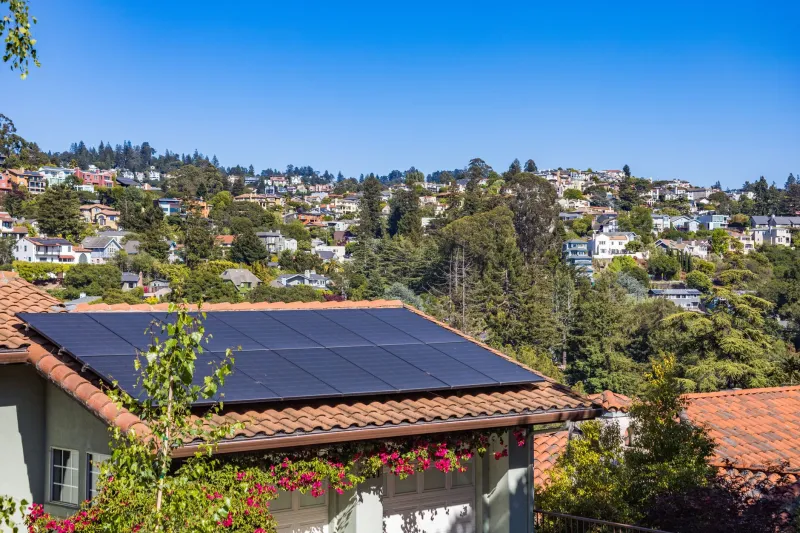
A domestic solar quotation is often read from the bottom up: total price, estimated yield, payback period. That is understandable, but it can obscure the part of the project that most often changes between installers. The array may be identical on paper; the route to the roof rarely is. Access is not a minor ancillary. It is a priced design decision, and in 2026 it remains one of the most reliable explanations for why two apparently comparable solar offers can differ by a four-figure sum.
At Inspired Renewables, the editorial position is straightforward: a quotation should make access visible before a homeowner signs. The cheapest headline price is not evidence of efficiency if it has been achieved by leaving scaffolding, roof protection or cable routing for later. In practice, that approach tends to convert a competitive quote into a costly variation once work begins.
Why access belongs in the design, not the small print
A PV array is only as buildable as the route to it. Installers need safe access to the roof plane, a controlled method for lifting panels and equipment, and a cable route that reaches the inverter without compromising the building fabric. On a simple two-storey house with clear side access, these tasks can be routine. On a terraced property with a conservatory, a chimney stack and restricted parking, they become a sequence of specialist works.
This matters for comparison because access costs are not always presented as a single line. One installer may include scaffolding, a pavement licence, roof edge protection and making good. Another may state that scaffolding is by others, that access is subject to survey, or that any highway licence is the customer's responsibility. The headline totals look comparable; the scopes do not.
What a 2026 domestic access allowance should cover
For a straightforward domestic installation, homeowners should expect access to be a meaningful line item rather than a token sum. As an indicative budgeting range in 2026, a simple two-storey semi-detached property might see £750 to £1,500 for scaffolding and associated access, while complex properties can exceed £2,000 or £3,000 where pavement licences, protection over glazed extensions, difficult parking or long carry distances are involved. These figures are not a quotation, and regional variation is considerable, but they illustrate why an access allowance of a few hundred pounds should prompt questions.
A properly described access scope should address:
- scaffold design, erection, hire, inspection and dismantling;
- roof edge protection and protection over conservatories, glass or fragile surfaces;
- pavement or highway licences, where the scaffold or working area affects the public highway;
- safe lifting and material handling, including any long carry from the delivery vehicle;
- the agreed cable route, including making good to walls, ceilings or loft spaces;
- insurance, competence and responsibility for temporary works.
Homeowners should also ask how the access has been treated for VAT and whether the quoted figure is fixed or provisional. The answer should be clear before contracts are exchanged.
Site conditions that move the number
Roof height is the obvious factor, but it is rarely the only one. A bungalow may need different access equipment from a three-storey townhouse. A steep roof, a dormer, a chimney stack or a series of velux windows can affect where scaffold can be placed and how panels can be moved safely. A conservatory directly below the array may require a protected scaffold rather than a simple tower. A fragile roof covering may demand crawl boards or an alternative method.
Street conditions matter as much as roof conditions. Narrow lanes, permit parking, bus stops, shop frontages and pedestrian routes can determine whether a licence is needed and how long the scaffold can remain. Cable routes are another frequent source of variation. A short external run to a garage inverter is a different proposition from a route through a finished loft, down an internal wall and into a utility room. The latter is not impossible, but it should be designed and priced rather than discovered.
How an undercounted quote reveals itself
An access undercount seldom announces itself. It appears as a low total with a broad caveat, such as scaffolding by others, access subject to survey, or no allowance for permits. It may quote a scaffold hire period that is too short for the likely programme, leaving the homeowner exposed to extension charges. It may omit making good or assume a cable route that the property cannot easily accommodate.
Homeowners should be especially cautious of any proposal that relies on ladders for roof work or treats scaffolding as optional for a typical pitched-roof installation. Safe access is not an upsell. It is part of doing the job properly.
Questions to ask before signing
A useful conversation with an installer can be built around a short list:
- Is scaffolding included as a fixed item, and what duration does it assume?
- Who obtains any pavement or highway licence, and is the fee included?
- How will the scaffold protect a conservatory, glass roof or fragile surface?
- Has the cable route been agreed, including making good?
- Are there restrictions on parking, deliveries or working hours?
- What happens if access is delayed by weather or licensing?
- Will the price change after the site survey, and on what basis?
- Which party is responsible for temporary works and insurance?
The answers should be written into the quotation or contract, not left as verbal assurances.
The real comparison
A solar quotation is not a commodity price for hardware. It is a proposal to carry out a construction project on a particular building. When access is transparent, homeowners can compare offers on a like-for-like basis and judge whether a lower price reflects genuine efficiency or an optimistic assumption. When access is vague, the lowest headline figure may simply be the one with the largest unresolved risk.
The sensible approach in 2026 is to ask for access to be itemised, explained and fixed where possible. A quote that costs a little more at the outset but describes the roof, the scaffold and the cable route honestly is usually the more dependable route to a completed installation.