Beyond the Default SEG: Matching Export Tariffs to a UK Home's Solar and Battery Rhythm

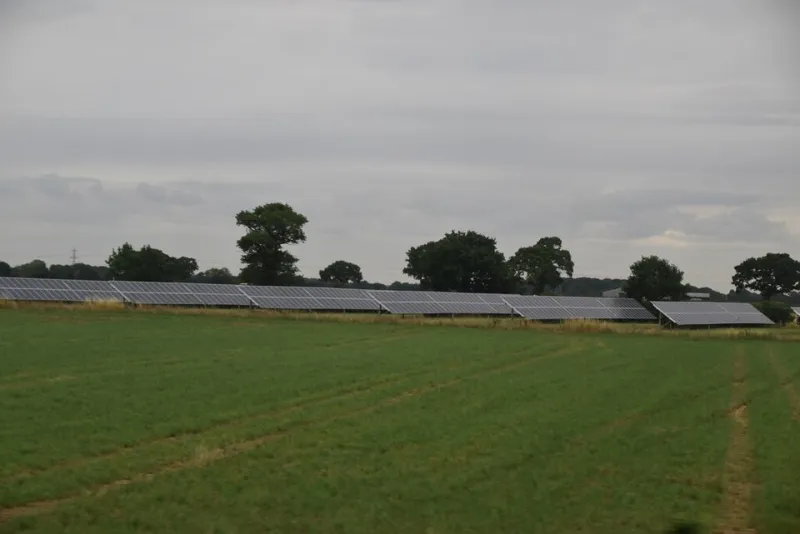
Photo: John Baker , CC BY-SA 2.0, via Wikimedia Commons
Most UK solar households do not choose an export tariff so much as inherit one. The installer commissions the system, the homeowner signs up with the incumbent supplier to satisfy the Smart Export Guarantee, and the rate is then left alone for years. That default is not dishonest, but it is rarely optimised. In 2026, with more export products in the market and more homes fitted with batteries, the cost of inertia is easier to see.
The useful question is not 'which tariff pays the most?' It is 'which tariff pays most for the electricity this house can actually export, at the times it can export it?' A headline rate is only meaningful once it is set against generation, demand and storage.
Begin with half-hourly data, not the headline rate
A smart meter is the foundation of any serious comparison. Download at least twelve months of half-hourly consumption and export data, if the supplier provides it, and add the inverter or battery records for generation. The aim is to see the shape of the day rather than the annual total. A south-facing array without a battery often exports in a broad midday block. A home with a battery may export in short bursts, or may export nothing at all in summer because the stored energy is reserved for the evening.
For each kilowatt-hour that could either be exported now or stored for later, the rough value of storing is: avoided import price multiplied by round-trip efficiency, minus the export rate foregone. A lithium battery system typically returns 85 to 90 per cent of the energy put into it, so a 1 kWh export forgone for storage yields perhaps 0.85 to 0.90 kWh of usable evening power. Add a small allowance for battery degradation and cycle cost. If the resulting figure is positive, storage is likely to pay. If it is negative, export is the better use of the electron.
Fixed, time-of-use and specialist export tariffs
Fixed export tariffs are the simplest products. They pay a set rate per kilowatt-hour exported, usually with no requirement to change import supplier and no dependence on battery control. They suit homes with modest export volumes or owners who value predictability over optimisation. The weakness is that a fixed rate will not reflect the growing gap between daytime surplus and evening peak prices.
Time-of-use export tariffs pay different rates at different times. Some reward export during an evening peak window; others pay a lower rate for most of the day and a higher rate for a short period. These products can work well for a home with a battery that can hold solar generation until the peak window, but they are less useful for a home that exports most of its surplus at midday. They also depend on a smart meter configured for half-hourly settlement and on the homeowner understanding the tariff windows.
Specialist export products, often linked to a particular technology or control platform, may offer stronger rates in exchange for allowing the supplier or aggregator some influence over battery dispatch. Read the control terms carefully. A tariff that requires the battery to be available for remote dispatch may conflict with a warranty condition, a comfort preference or a separate time-of-use import tariff.
Meter, MPAN and MCS paperwork
The administrative side is less exciting than the rate but more likely to delay payment. A Smart Export Guarantee application normally requires an MCS certificate for the installation, confirmation of the installation date and capacity, and evidence that the distribution network operator has been notified. The supplier also needs the export MPAN, a separate meter point reference from the import MPAN. It is a 13-digit identifier, and it is not always obvious on the paperwork.
If the export meter has not been configured correctly, the supplier may receive import data but no export data. The result is a tariff that looks live on paper but pays nothing. Ask the supplier to confirm that the export MPAN is active and that half-hourly export readings are reaching the billing system. If a battery has been added since commissioning, check whether the MCS certificate and DNO notification need updating. A change of inverter or battery capacity is not always a simple administrative note.
Switching traps to check before signing
The first trap is assuming that changing import supplier changes export supply. In many cases the export MPAN sits on a separate account, with separate terms and separate payment arrangements. The second is a gap between contracts. Confirm that the new export tariff is live before the old one is closed; otherwise exported electricity may be treated as unclaimed for a period.
Read the termination terms. Some fixed export products carry exit fees or notice periods. Check whether payments are credited against the import bill or paid separately, and whether any import standing charge changes as part of a bundle. A bundle can be convenient, but it can also hide a poor export rate behind a competitive import rate.
Be sceptical of any product that promises a high rate only for a short introductory period. Look at the price change notice, the cap, the fair use rules and the treatment of deemed or estimated readings. Finally, check the control requirements against the battery warranty. A tariff should not require a mode of operation that the manufacturer excludes.
The decision rule in practice
Take a home that exports 2,000 kWh a year. The difference between a 5p rate and a 15p rate is £200 a year, before any change in behaviour. That is material, but it is not the whole calculation. If the same home has a battery and an evening import price of 25p, then a stored kilowatt-hour is worth about 21p to 22p after efficiency losses. Exporting at 15p and buying back at 25p is worse than storing, provided the battery has spare capacity and the cycle cost is low. Exporting at 25p during a peak window, while avoiding a 25p import later, is a different proposition.
The practical sequence is straightforward. Download the data, model the three or four plausible tariffs, request the MPAN and MCS paperwork, and switch with an overlap rather than a gap. Review the position after a full summer and a full winter. Export tariffs are not a one-off purchase; they are a running relationship with the weather, the battery and the price signal.