Headroom at the Meter Cabinet: Planning Electrical Supply for a Fully Electrified Home

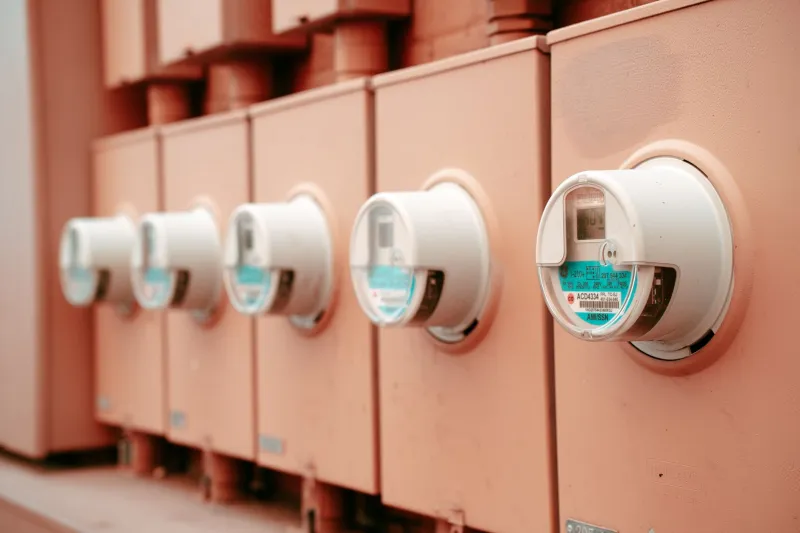
Photo: UK electrician inspecting domestic consumer unit and electricity meter cabinet, via facts.net
A domestic electrification project is usually discussed in terms of roof space, heat-pump output and battery capacity. The meter cabinet receives far less attention, yet it can determine whether those technologies deliver their promised performance. In a fully electrified UK home, the incoming supply is not a background detail. It is the boundary within which every load must operate.
What a 100-amp supply actually provides
A single-phase domestic supply is typically rated at 230 volts and protected by a main fuse of 60, 80 or 100 amps. At 100 amps, the theoretical maximum is around 23 kVA. That figure is not a continuous allowance for every appliance in the house. Main fuses, meter tails, consumer units and metering equipment are selected with diversity in mind: the reasonable assumption that not every load will run at full power at the same moment.
Historically, a 100-amp supply has been generous for a gas-heated home with an electric oven, immersion heater and occasional power tools. Electrification changes the pattern. A 7.4 kW EV charger alone draws around 32 amps. A heat pump might draw 3 to 6 kW depending on size and weather, while a battery charging at 3.6 to 5 kW adds further demand. Add an electric shower, induction hob or immersion heater and the arithmetic becomes less comfortable.
When the ceiling comes into view
The supply becomes marginal when new loads are added without a proper maximum-demand calculation. A common warning sign is a home with an older 60- or 80-amp fuse, 25 mm² meter tails and a consumer unit with limited spare capacity, now considering a heat pump, EV charger and battery in the same programme of work. Another is a modern home where the owner expects the EV to charge at full rate overnight while the battery also charges and the heat pump runs during a cold snap.
Diversity can still preserve headroom, but it should be demonstrated rather than assumed. A home that rarely uses an electric shower, cooks with gas and charges the EV only at weekends may have more capacity than its connected-load total suggests. A home with two electric vehicles, an electric hob and a large heat pump may not. Half-hourly smart-meter data is useful evidence here: it shows actual peak demand and the timing of existing loads.
The assessment: from load schedule to DNO application
A competent electrical survey should begin before equipment is ordered. The electrician should record the main fuse rating, the size and condition of meter tails, the earthing arrangement, the consumer-unit capacity and the physical space around the meter cabinet. The proposed loads should then be set out in a load schedule, with diversity applied in accordance with BS 7671 and the equipment manufacturers’ instructions.
Where the calculated demand approaches or exceeds the existing fuse rating, the distribution network operator should be consulted. The DNO will assess the local network as well as the service to the property. A simple fuse upgrade may be possible, but an increase from single-phase to three-phase is a larger project: it can require a new service cable, a new meter, changes to the consumer unit and coordination with the meter operator. The application should be made early, because network and metering lead times can be measured in weeks or months rather than days.
Who pays for what
The homeowner normally pays for private electrical works: the survey, any consumer-unit alterations, dedicated circuits for the heat pump and EV charger, earthing improvements and load-management controls. The DNO charges for connection and supply alterations, and in some cases for network reinforcement. Contestable works may be carried out by an accredited independent connections provider, but the DNO remains responsible for the final connection.
Costs vary widely. A fuse upgrade and associated metering changes may be relatively modest; a three-phase conversion can run into several thousand pounds, particularly where a new cable run is needed. The important point is to budget for the supply as part of the renewable project, not as an unwelcome discovery after the battery has been mounted on the wall.
Three-phase or load management?
Three-phase supply removes the single-phase ceiling and gives far more headroom, but it is not always practical or proportionate. For some homes, dynamic load management is the better answer: the EV charger can pause or reduce its rate when the heat pump and battery are drawing power, and the battery can be configured to avoid charging during peak household demand. This preserves the existing supply but requires clear priorities and a homeowner who understands the trade-offs.
Load management should not be treated as a substitute for adequate capacity where the household genuinely expects simultaneous high-power use. Nor should it be confused with export limitation. Import management protects the incoming fuse; export limitation controls power sent to the grid. A well-designed system may need both, and each should be documented at commissioning.
Sequencing the work
The most reliable sequence is electrical assessment first, equipment selection second. Obtain a load schedule and a written view on supply capacity before signing for a heat pump, battery or EV charger. Apply to the DNO as soon as the need is identified. Complete any supply upgrade, earthing improvement and consumer-unit work before the renewables are commissioned. Finally, configure and test the load-management settings, and keep a record of the approved capacity and settings in the handover pack.
In 2026, a fully electrified home is no longer an unusual specification. It is a normal design brief. Treating the meter cabinet as part of that brief, rather than as an afterthought, is the difference between a system that runs as intended and one that is quietly throttled by the supply behind it.