Funding Before Hardware: How to Read a Heat Pump Quote in 2026

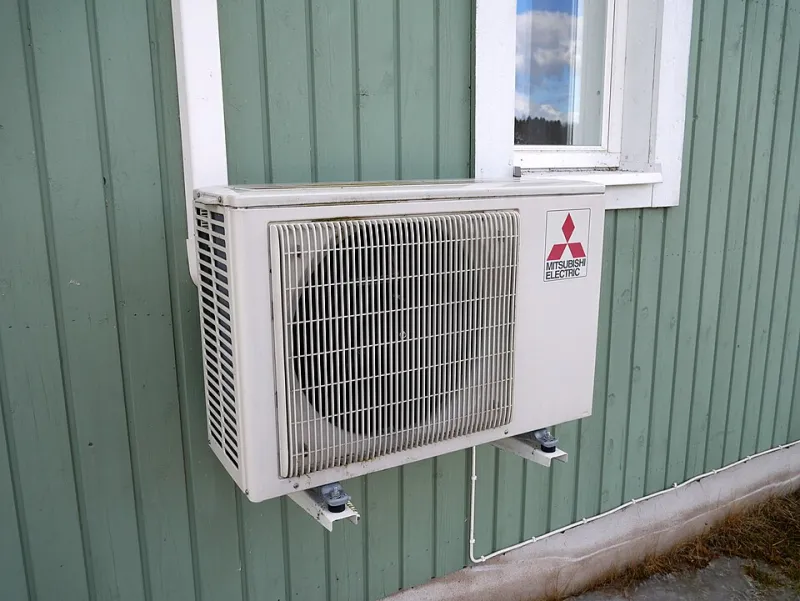
Photo: One Trick Pony from Stockholm, CC BY-SA 2.0, via Wikimedia Commons
Homeowners approaching a heat pump in 2026 are not simply buying a box and a commissioning visit. They are assembling a package of funding, specification and installation risk. The Boiler Upgrade Scheme remains the best-known route in England and Wales, but it is not a discount sticker that can be applied after a price has been agreed. It is a funding instrument with its own eligibility tests, evidence requirements and timing. Treating it as such is the difference between a clear quote and a pleasant-looking number that quietly absorbs the subsidy.
Begin with the scheme, not the sales headline
The first task is to establish whether the property and the proposed work are eligible. The Boiler Upgrade Scheme is administered through Ofgem and is delivered by MCS-certified installers. It is designed for properties replacing fossil-fuel heating with a qualifying low-carbon system, and it is not available for every dwelling or every arrangement. Scotland has its own support through Home Energy Scotland, while Northern Ireland follows a different route again. A UK-wide guide can only go so far; the householder should check the live rules for their nation and their property before comparing prices.
This matters because grant eligibility shapes the quote. If an installer presents a net figure before eligibility has been confirmed, the homeowner cannot tell whether the deduction is secure. Ask for the gross cost, the proposed grant deduction and the evidence that will support the application. The grant should appear as a named line, not as a vague allowance.
What can and cannot be bundled
A heat pump installation legitimately involves more than the outdoor unit. New radiators, pipework, a hot-water cylinder, controls, electrical upgrades and making good may all be necessary. The presence of these items is not automatically a red flag. The question is whether each item is justified by a room-by-room heat loss assessment and a realistic emitter design.
What installers cannot do is use the grant to cross-subsidise unrelated work or to inflate ancillary costs so that the headline net price appears more attractive. The grant is attached to a qualifying installation, not to a general home-improvement budget. If a quote includes solar panels, a battery, a new bathroom or landscaping, those costs should be separated clearly and justified on their own terms. The homeowner should be able to see which lines are grant-funded, which are required for the heat pump to perform, and which are optional.
The quiet absorption problem
A common weakness in grant-era quoting is the absorbed subsidy. The gross price rises, the grant is deducted, and the net price lands close to what a fair gross price should have been. The homeowner sees a familiar-looking total and assumes the grant has delivered a saving. In practice, the funding has been captured by the supply chain rather than passed through.
There is no single test for this, but itemisation helps. Compare the quote against a detailed specification rather than against another headline figure. Ask for a breakdown of labour, equipment, emitters, cylinder, controls, electrical work and commissioning. Check whether the grant deduction exactly matches the voucher value and whether any administration fee has been added. A credible installer will not object to showing the arithmetic.
Fabric, emitters and the flow-temperature question
The most useful quotes are designed from the building outwards. A heat loss survey should be room by room, not a rule-of-thumb estimate based on floor area. It should consider insulation, glazing, draughts and air permeability. Fabric improvements may not be funded by the grant, but they change the emitter specification. A better-insulated room may need a smaller radiator and a lower flow temperature, which in turn supports efficiency.
Emitter sizing is where many quotes reveal their assumptions. Radiators rated at a high flow temperature may look adequate on paper but perform poorly in a low-temperature system. The quote should state the design flow temperature, the expected delta T and the calculated output of each emitter at those conditions. If the design relies on a high flow temperature to keep radiator sizes down, the homeowner should ask what that means for running costs and for the heat pump's modulation range.
Commissioning is part of the product
A heat pump is not finished when the outdoor unit is bolted to the wall. Commissioning records, weather compensation settings, balancing and a clear handover are part of what the homeowner is paying for. The quote should identify who will commission the system, what evidence will be provided, and how the installer will demonstrate that the design conditions have been met. MCS certification and building regulations notification should be included, not treated as an afterthought.
The grant paperwork also depends on a clean installation record. Missing commissioning data or a mismatch between the quoted specification and the installed system can delay or jeopardise the voucher. A homeowner who asks for these details before work begins is not being difficult; they are protecting the funding.
Questions to ask before joining the queue
Before committing, ask whether the property is eligible under the current scheme rules, which nation's scheme applies, and what evidence the installer will submit. Request a gross quote and a net quote side by side. Ask for the heat loss calculation, the emitter schedule and the design flow temperature. Confirm what is included in commissioning, what warranties apply and who handles the grant application.
The grant is useful, but it is not a substitute for a good specification. In 2026, the homeowner's advantage lies in reading the quote as a funding and engineering document, not as a discount voucher. Get the arithmetic, the heat loss and the commissioning plan before joining the queue.