Hot Water, Twice Over: Auditing Solar Diversion Before It Duplicates a Heat Pump
Solar diversion has an appealing simplicity. A current transformer clips to the incoming supply, a controller watches for export, and an immersion heater inside the hot-water cylinder absorbs whatever the home is not using. On a bright afternoon the cylinder warms, the export meter slows, and the household feels it has captured value that would otherwise have gone to the grid. That description is accurate as far as it goes, but it treats hot water as a free sink rather than as a system with its own losses, controls and competing heat source.
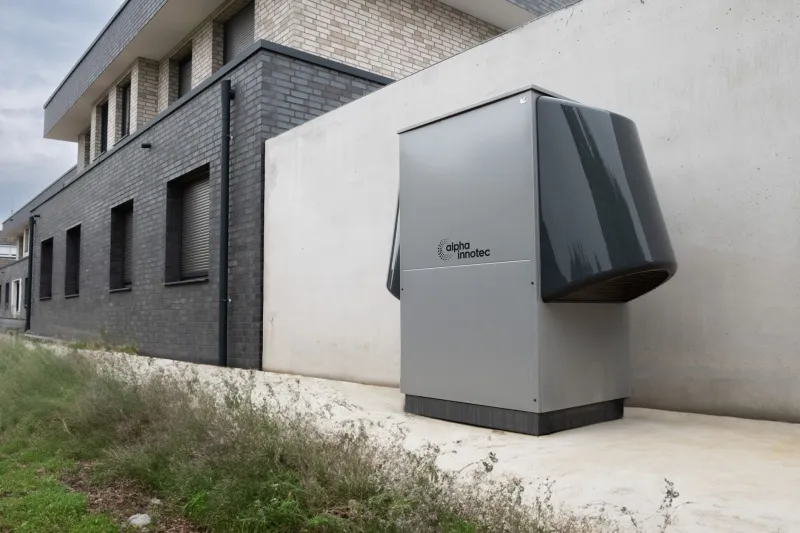
The difficulty is not that diversion is pointless. It is that diversion is often installed without a clear answer to a prior question: what would have heated this water otherwise, and when? In a home with a heat pump, the answer may be a machine that delivers two to four units of heat for every unit of electricity. In a home with a gas boiler, the answer may be a boiler that heats water quickly but at a higher carbon intensity. In a home with neither, diversion may be the main event. The economics and the carbon case change accordingly.
What the diverter actually controls
A solar diverter is a proportional controller, not a smart energy manager. It modulates the immersion load to match measured export, usually in small steps. Most units can be set to prioritise domestic hot water, battery charging or a combination, and many allow a minimum export threshold before the immersion switches on. Those settings matter more than the headline rating of the immersion element.
An immersion heater has a coefficient of performance of about one. Every kilowatt-hour of solar electricity delivered to the element becomes, at best, one kilowatt-hour of heat in the water. A heat pump operating at a seasonal coefficient of performance of three would use one kilowatt-hour of electricity to deliver roughly three kilowatt-hours of heat. If the same solar kilowatt-hour could instead run the heat pump, diversion may be the lower-value use. If the alternative is exporting at a modest smart export guarantee rate, diversion may still be attractive. The comparison is not between solar and nothing; it is between solar and the next best use of that electricity.
The cylinder is part of the calculation
Hot-water cylinders lose heat continuously. Standing losses depend on insulation, volume, pipework and the temperature maintained. A well-insulated cylinder may lose less than two kilowatt-hours a day; an older, poorly insulated cylinder in a cool cupboard can lose considerably more. Diverting surplus solar into a cylinder that then sheds heat through the night is not free storage. It is a short-term thermal store with a measurable standing loss.
Temperature settings also shape the result. Storing water hotter increases standing losses and cylinder heat loss, and it raises the risk of scalding unless a thermostatic mixing valve is fitted. Storing water cooler reduces losses but may conflict with legionella guidance and with the heat pump manufacturer's settings. In 2026, many heat pumps run cylinders at around 45 to 55 degrees Celsius for efficiency, with periodic pasteurisation cycles. An immersion heater set to a higher temperature can override that logic and leave the heat pump with less useful work to do.
Cylinder size and coil surface area matter too. A small cylinder with a large coil can recover quickly from a heat pump, but it may not store enough to carry a household through an evening. A large cylinder stores more but has greater standing losses. Diversion into a large tank on a sunny day can fill capacity that would otherwise be heated efficiently later. Diversion into a small tank can reach its thermostat quickly and then export the rest.
Where duplication creeps in
The central risk is heating water twice. A heat pump may be scheduled to heat the cylinder in the early afternoon, when outdoor temperatures are higher and the heat pump can run efficiently. A diverter may also be active in the same period, raising the cylinder temperature with the immersion. If the heat pump then runs to lift the cylinder to its target, it may be reheating water that the immersion has already heated, or it may be prevented from running because the cylinder thermostat is satisfied. Either way, the control logic matters more than the hardware.
The reverse can also happen. A diverter may be set to top up the cylinder in the evening, after the heat pump has finished its domestic hot-water cycle. That can be useful if the household has a late demand peak, but it can also raise cylinder temperature after the efficient heat pump has completed its work. The result is a warmer tank, higher standing losses and an immersion contributing heat that could have been delivered by the heat pump earlier.
Auditing before spending
A sensible audit starts with measurement rather than shopping. Record the cylinder volume, insulation type and thickness, thermostat settings, immersion position, and the presence of any thermostatic mixing valve. Note the heat pump's domestic hot-water schedule, its target temperature and any legionella cycle. Then look at the diverter settings: minimum export threshold, priority order, temperature limit and any timer.
A simple overnight standing-loss check is informative. Record the cylinder temperature before the household goes to bed and again before the morning hot-water demand begins, with no heating or hot-water draw in between. That gives an approximate sense of how much heat the cylinder sheds. It is not a laboratory test, but it helps show whether the cylinder is a reasonable store or a leaky one.
Half-hourly meter data can show when the heat pump, immersion and solar generation overlap. If the immersion is active while the heat pump is also heating water, the control settings need attention. If the immersion is heating the cylinder late at night from the grid, the diverter is not the cause but the tariff and schedule may be. If the cylinder reaches its thermostat by midday and export continues, the household may have more solar than the cylinder can usefully absorb.
When diversion earns its place
Diversion makes most sense where surplus solar would otherwise be exported at a low value, where the cylinder is well insulated and appropriately sized, and where the alternative heat source is an immersion or a boiler rather than an efficiently scheduled heat pump. It can also be useful as a summer top-up in homes with a heat pump, provided the controls prevent the heat pump from reheating the same water unnecessarily.
The case weakens where the cylinder is poorly insulated, where the heat pump is already scheduled to heat water efficiently, or where the diverter competes with a battery for the same surplus. A battery can shift solar to evening demand with lower standing losses than a cylinder, though it has its own round-trip losses and capital cost. The comparison is system-specific.
The hot-water ledger is therefore not a payback table. It is a record of where heat comes from, where it is stored, and where it is lost. Before adding diversion in 2026, audit the cylinder and the controls, establish what would otherwise heat the water, and decide whether the immersion is capturing surplus or duplicating work. The answer will not be the same in every home, but the question is worth asking before the element switches on.