Rooftop PV Without Freehold: A Tenant's Guide to Solar on Leased Business Premises

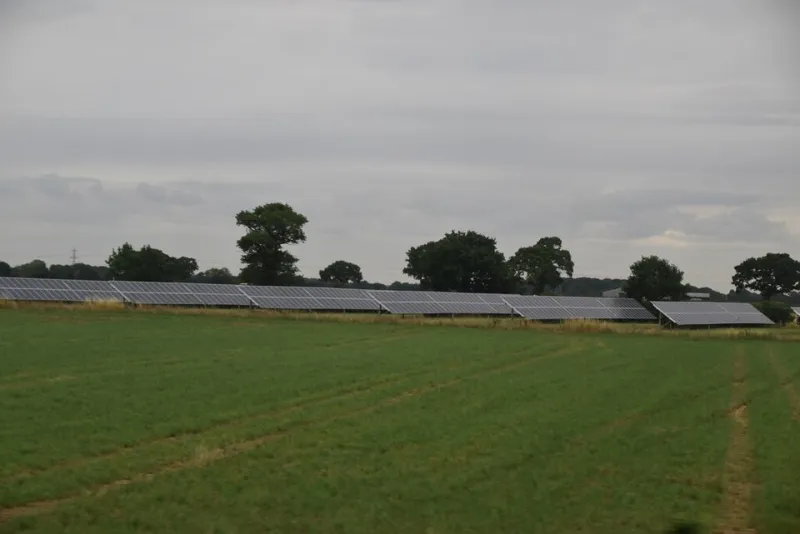
Photo: Gerald England , CC BY-SA 2.0, via Wikimedia Commons
Businesses that rent or lease their premises often assume solar is off the table. It is not, but the project is as much a property and contract exercise as an electrical one. A tenant can install rooftop PV, buy power from a landlord-owned array or sign a power purchase agreement with a third-party investor. Each route depends on lease length, landlord consent and metering.
Read the lease before commissioning a survey
The first question is not roof orientation but tenure. Check the unexpired term, break clauses, rent review dates and any alterations clause. A solar project typically needs a payback period shorter than the remaining lease, or a contractual way to recover value if the tenant leaves. A lease with three years left and a tenant break in twelve months is unlikely to support a tenant-owned array, however good the roof.
Look for reinstatement obligations. A landlord may require the tenant to remove the system and make good at lease end. That cost should be priced at the outset. Check service charge provisions, insurance obligations and any restrictions on subletting or sharing power. In multi-let buildings, the electricity supply arrangement may be more complicated than the lease wording suggests.
Survey the building, not just the roof
A structural engineer and roofing specialist should confirm that the roof can take the additional load and that the covering has a reasonable remaining life. Replacing a roof after fitting panels is unnecessarily expensive. Asbestos, fragile roof lights, drainage, access and fire safety all need attention. Shading from plant, parapets and neighbouring buildings should be modelled, not guessed.
The building's electrical infrastructure matters too. Check the age and capacity of the distribution board, the route for DC and AC cabling, and the space for inverters and batteries. For a commercial tenant, the supply capacity and metering arrangement may be shared with other occupiers. A solar array connected to the wrong meter can produce a contract dispute rather than a saving.
Negotiate consent in writing
Landlord consent is usually required for alterations. A licence to alter or a standalone solar licence should set out ownership of the equipment, rights of access for maintenance, insurance, reinstatement, assignment and what happens at lease end. The landlord will want assurances about roof warranty, water ingress and structural liability. The tenant will want certainty that consent cannot be withdrawn arbitrarily.
Where the landlord owns the array and sells power to the tenant, the arrangement needs a power purchase agreement. Where a third-party investor owns the system, the landlord and tenant may both be party to the agreement. In either case, the tariff, term, indexation, termination rights and export treatment should be explicit. A handshake is not enough for an asset with a fifteen-year life.
Metering and power purchase agreements
The simplest model is a tenant-owned array behind the tenant's own meter, supplying the tenant's load. The tenant consumes what it generates and exports any surplus. For multi-let premises, private wire arrangements and sub-metering require careful legal and technical design. The tenant should not pay for power generated on another occupier's roof, and the landlord should not unintentionally become an electricity supplier without advice.
A power purchase agreement can suit a tenant with a short lease or limited capital. The investor or landlord funds the array; the tenant buys the output at an agreed rate. The devil is in the detail: take-or-pay obligations, minimum offtake, price escalation, roof access, insurance and what happens if the tenant vacates. Export payments may go to the system owner, not the tenant, unless the contract says otherwise.
Grid, planning and compliance
Most commercial rooftop systems need a distribution network operator application, often under G99 or G100 depending on size and export behaviour. Planning permission may be required, particularly in conservation areas or on listed buildings, and permitted development rights are not unlimited. Building regulations, fire safety guidance and insurance notifications should be checked before installation.
A staged decision
The practical sequence is: review the lease, obtain a roof and structural survey, agree heads of terms with the landlord, design the metering and export arrangement, make the grid application, then procure. If the lease is short, a landlord-owned or third-party PPA may work where tenant ownership does not. If the roof is nearing replacement, wait or combine the works. Solar can be a sound commercial decision for a tenant, but only when the property contract is as carefully engineered as the array.